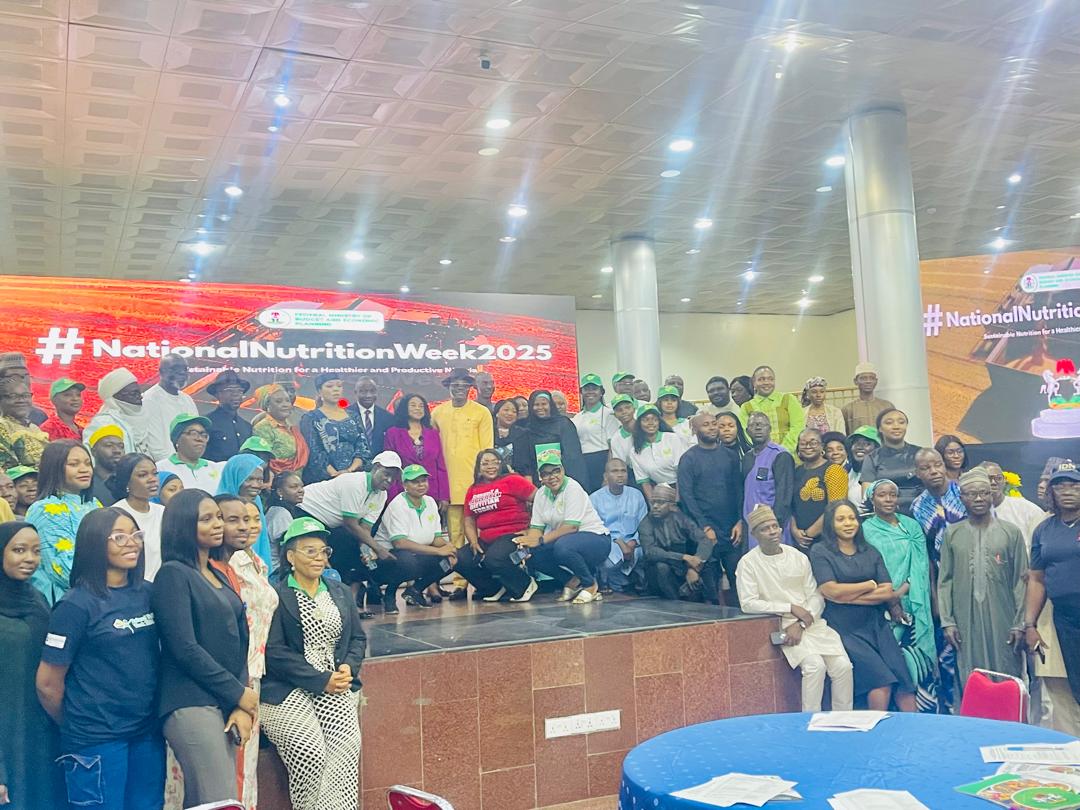
The 2025 National Nutrition Dialogue, convened by the Federal Ministry of Budget and Economic Planning in collaboration with key nutrition stakeholders, took place from November 24th to 25th at the Rockview Royale Hotel, Abuja. This high-level event, marking the annual National Nutrition Week, gathered 196 participants—including representatives from the Office of the Vice President, MDAs, Nigeria Governors’ Forum, media, civil society, faith-based organizations, academia, communities, and development partners.
The event opened with the National Anthem, followed by a welcome address from Mrs. Clementina Okoro, Director of Nutrition, speaking on behalf of the Acting Permanent Secretary, Federal Ministry of Budget and Economic Planning. Mrs. Okoro emphasized the significance of the Nutrition Week as a platform to promote healthy living, nutrition education, and public awareness on malnutrition.
This year’s theme, “Sustainable Nutrition for a Healthier and Productive Nigeria”, and its sub-theme, “Coherent Policies and Actions for Better Nutrition and Productivity in Nigeria,” set the tone for deliberations. Stakeholders were urged to reflect on the relevance of these themes for national development and to commit to collective action.
Prof. Ngozi Nnam, a veteran nutrition advocate, traced the origins of the National Nutrition Week to 2012, officially launched in 2016. She highlighted its evolution into a critical initiative for public health advocacy.
The keynote address by Dr. Chris Osa Isokpunwu, Permanent Secretary at the Federal Ministry of Steel Development, reinforced the vital link between adequate nutrition, workforce productivity, and national resilience. He advocated for urgent action to align policies with rapid population growth, scale essential nutrition services, and strengthen food systems amid climate change challenges.
Flag-Off and Launch of Nutrient Profile
Senator Atiku Bagudu, Minister of Budget and Economic Planning, represented by Dr. Sampson Ebimaro, declared the 2025 Nutrition Week officially open and launched the “Nutrient Profile of Selected Nigerian Dishes.” The launch marked a milestone in Nigeria’s efforts to institutionalize dietary guidelines and evidence-based nutrition programming.
Goodwill Messages and HLADI’s Participation
Goodwill messages were delivered by representatives from the Office of the Vice President, Federal Ministries, Civil Society Organizations, and development partners. Among them, the Health and Lifestyle Awareness Development Initiatives (HLADI) proudly participated, reinforcing its unwavering support for multisectoral collaboration in addressing malnutrition. HLADI representatives contributed to critical policy discussions and affirmed the organization's commitment to inclusive and sustainable nutrition solutions.
Panel Discussions and Plenary Highlights
Day one of the Dialogue featured two panel sessions with speakers from MDAs, international partners including GAIN and Nutrition International, UNICEF, youth representatives, women’s groups, the media, and the Children’s Parliament. Discussions centered around:
- Coherent Policies and Actions for Better Nutrition and Productivity in Nigeria
- Financing Nutrition for Growth: Aligning Budget with Impact
Day two featured plenary presentations on:
- Dashboard learning and socialization
- Leveraging data for nutrition monitoring and accountability
Further panel discussions addressed:
- Strategic frameworks for multisectoral data coordination
- Climate resilience in food systems
- Research translation and evidence-driven interventions
Key Resolutions
Several key resolutions emerged from the Dialogue:
1. MDAs must have clear, defined roles to prevent overlap.
2. FMBEP’s coordination mandate should be strengthened.
3. MDAs should build sector-specific nutrition plans aligned with national goals.
4. Inclusion of youth, women, religious, and traditional leaders in policy development.
5. Strengthened institutional and planning capacities across sectors.
6. Broaden stakeholder engagement and ownership of interventions.
7. Establish sustainable nutrition financing frameworks.
8. Enhance use of data and evidence for advocacy and planning.
9. Prioritize high-impact, community-level interventions
10. Link nutrition dashboards with other data systems for better learning and updates.
Conclusion
The 2025 National Nutrition Dialogue concluded with strong commitments from all stakeholders to transform policy dialogue into action. HLADI joins the Federal Government and partners in reaffirming the shared responsibility of ensuring sustainable nutrition and health outcomes for all Nigerians. Together, these stakeholders pledge to uphold transparency, urgency, and inclusive collaboration in delivering impactful, nutrition-sensitive programs nationwide.
Signatories:
Representatives from Government, HLADI, Civil Society, Academia, Media, Youth, and Development Partners.
Report by Ugokwe Collete Chikamso
Communications & Documentation Unit, HLADI