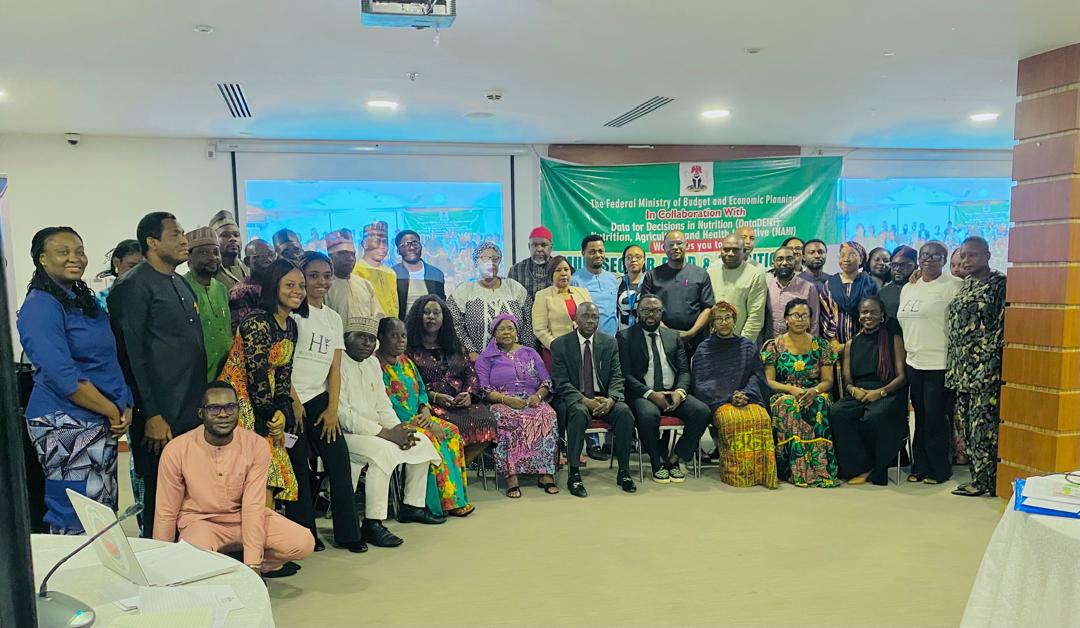
The Health and Lifestyle Awareness Development Initiative (HLADI) joined stakeholders from across government, civil society, development agencies, and academia at the National Multisectoral Food and Nutrition Data Technical Workshop, held in Abuja from April 29–30, 2024. The two-day workshop focused on strengthening data governance, improving interoperability between sectors, and advancing evidence-based decision-making in Nigeria’s food and nutrition space.
Organized under a multisectoral framework, the workshop convened technical experts and representatives from key Ministries, Departments, and Agencies (MDAs), alongside development partners, civil society organizations, academic institutions, and private-sector actors. The platform enabled constructive dialogue on building a harmonized, efficient, and inclusive national nutrition data system capable of supporting policy development, program design, and strategic implementation at both national and subnational levels.
Workshop Focus Areas
The sessions explored several critical themes essential to Nigeria’s nutrition data landscape, including:
- Identifying and addressing data gaps, inconsistencies, and fragmentation.
- Strengthening interoperability between national databases and sector-specific platforms.
- Integrating nutrition-sensitive indicators into routine data collection systems.
- Enhancing community-level data collection, surveillance, and real-time reporting.
- Improving data governance, quality assurance, and accountability structures.
- Building institutional capacity for sustained, efficient use of nutrition data.
Discussions underscored the urgent need for streamlined, multisectoral data systems that support timely decision-making and reinforce Nigeria’s commitment to combating malnutrition through data-driven strategies.
HLADI’s Contribution
HLADI actively engaged in technical sessions, sharing perspectives on the importance of:
- Community-generated data and participatory ownership models.
- Inclusive data systems that reflect the needs of marginalized and vulnerable populations.
- Locally driven innovations that strengthen nutrition tracking and surveillance at grassroots levels.
HLADI emphasized that Nigeria’s nutrition data ecosystem must be people-centered, adaptable, and designed to support real-time responses in communities most affected by malnutrition.
Outcomes of the Workshop
The workshop concluded with a renewed national commitment to:
- Strengthen cross-sector collaboration and harmonize nutrition data processes.
- Institutionalize evidence-based decision-making across government structures.
- Expand data sharing practices among MDAs and partners.
- Implement an agreed-upon roadmap outlining priority actions for improving Nigeria’s food and nutrition data systems.
This roadmap serves as a strategic guide for enhancing data quality, accessibility, and use in shaping Nigeria’s future nutrition policies and programming.
HLADI’s Continued Commitment
HLADI remains dedicated to advancing robust, resilient, and inclusive nutrition data systems across Nigeria. Through partnerships, advocacy, and community engagement, HLADI continues to champion sustainable solutions that promote health equity, food security, and improved nutrition outcomes for all populations.